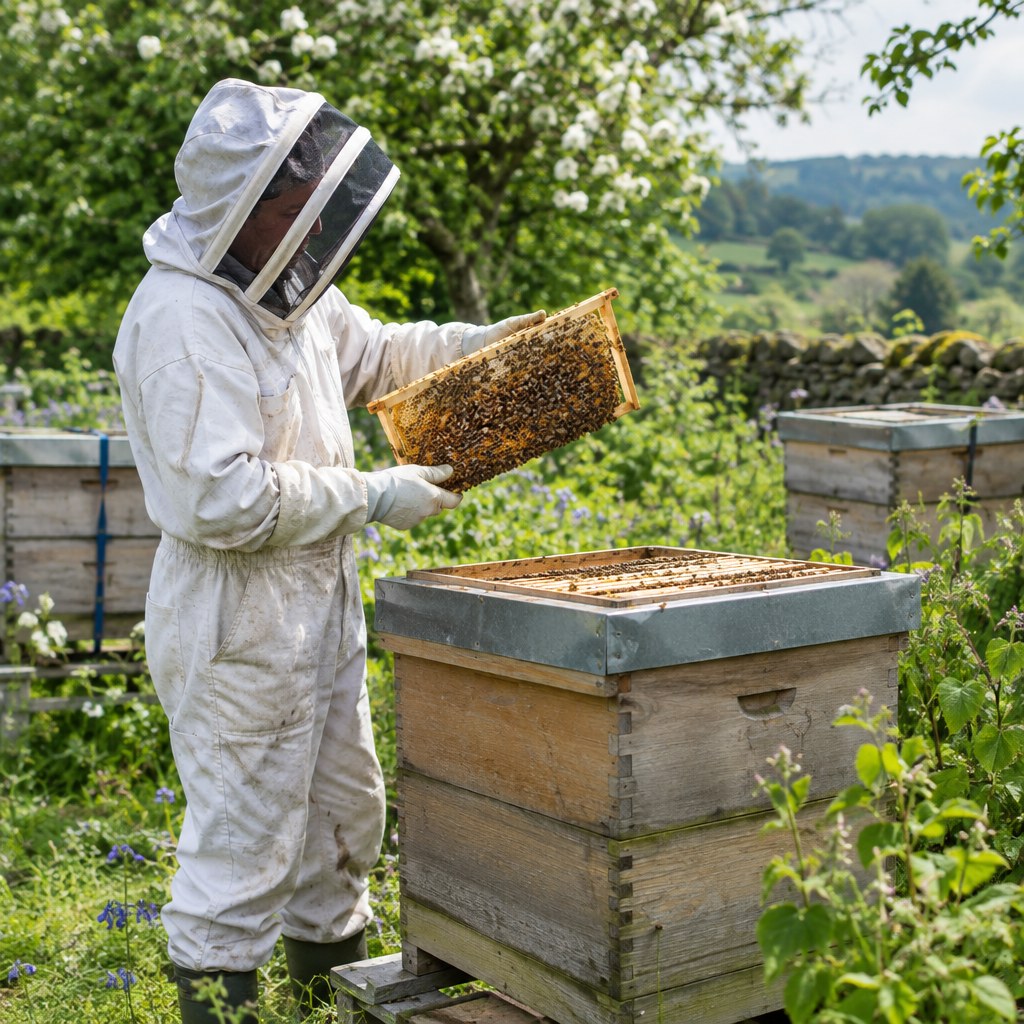
Beekeeping in the UK follows the seasons, but the weather and colony development—not the calendar alone—should guide every decision. This month-by-month guide outlines typical tasks for British beekeepers, from winter checks and spring expansion to swarm management, honey harvesting and autumn preparation.
January: Winter protection and planning
- Keep hive entrances clear of snow, dead bees and debris.
- Check hive stability, roofs and straps after storms, without unnecessarily opening colonies.
- Monitor stores using weight checks; provide fondant if a colony is running short.
- Plan equipment repairs, frame replacement, apiary work and the season’s records.
February: Prepare for the first activity
- Continue checking stores and hive security.
- On suitable mild days, observe flight activity and signs of cleansing flights.
- Clean and prepare spare equipment, frames and feeders.
- Review records and plan inspections for suitable weather once spring conditions arrive.
March: First careful inspections
- Inspect only when conditions are warm, calm and suitable, and colonies can be kept together without chilling brood.
- Check brood pattern, queen presence or evidence of laying, food stores and colony strength.
- Feed syrup if appropriate and stores are inadequate; avoid feeding when it risks contaminating honey intended for harvest.
- Assess whether colonies need space, while avoiding premature expansion.
April: Build-up and space
- Monitor brood expansion and congestion as forage increases.
- Ensure colonies have appropriate room for brood and nectar, adding boxes when colony strength and conditions justify it.
- Check for signs of queen problems, disease and abnormal brood.
- Begin systematic swarm-prevention checks as colonies develop.
May: Swarm season begins
- Inspect regularly for swarm preparations, including queen cells and congestion.
- Use an appropriate swarm-management method based on colony condition and your objectives.
- Consider making splits from strong, healthy colonies when conditions and resources allow.
- Keep records of queen status, colony strength, interventions and equipment changes.
June: Swarm control and queen rearing
- Continue frequent swarm inspections during active swarm season.
- Make planned splits and raise or introduce queens only where colonies and timing support success.
- Ensure colonies have adequate space for nectar flows.
- Monitor weather and forage conditions; avoid disrupting colonies unnecessarily during major flows.
July: Honey flow and colony management
- Check supers and add capacity when needed, keeping space management ahead of congestion.
- Assess honey maturity before harvesting.
- Maintain swarm checks where colonies remain at risk.
- Record yields, batch details and observations for each apiary and hive.
August: Harvest and Varroa management
- Harvest ripe honey using hygienic methods and record batches.
- After harvest, make Varroa monitoring and treatment a priority, following product instructions and UK guidance.
- Check queen performance and colony strength after the season’s main flows.
- Begin assessing winter requirements and suitable replacement or consolidation plans.
September: Feed and prepare for winter
- Ensure colonies have adequate winter stores, using appropriate feeding methods and timing.
- Confirm that Varroa treatment has been completed and assess mite levels as advised.
- Reduce unnecessary space and protect colonies from robbing.
- Review weak colonies and make sound management decisions before colder weather.
October: Final checks
- Check stores and top up where needed and feasible.
- Fit mouse guards where appropriate and ensure entrances are suitably reduced.
- Secure roofs and stands, and check protection from wind and damp.
- Minimise disturbance as colonies settle into winter.
November: Protect and leave undisturbed
- Check straps, roofs, stands and entrances from outside.
- Clear debris and ensure ventilation is appropriate to the hive design.
- Watch for signs of robbing or damage and respond promptly.
- Review records and prepare next season’s equipment and plans.
December: Rest, review and prepare
- Continue occasional external checks after severe weather.
- Monitor colony weight and provide fondant if necessary.
- Repair and assemble equipment, replace worn frames and plan apiary expansion.
- Review the season’s records to identify improvements for the year ahead.
How to use this month-by-month calendar
Use the monthly tasks as a planning framework rather than a fixed timetable. In the UK, a cold spring can delay colony development, while a warm spell may bring forward inspections or swarm activity. Before acting, assess the weather forecast, forage, colony strength and the condition of each hive. Prioritise the needs of the bees over the date on the calendar.
Use this calendar to plan your apiary work
At the start of each month, use this short review to adapt the calendar to your own colonies and local conditions:
- Weather and forage: What conditions have changed, and what forage is available or approaching?
- Colony strength: Which colonies are thriving, weak, queenless or showing signs of stress?
- Food and space: Which colonies need stores, room or a change in management?
- Swarm risk: Are inspections and swarm-management decisions appropriate for the season?
- Health: What monitoring, disease checks or Varroa actions are due?
- Equipment: What boxes, frames, feeders or protective equipment need preparing?
- Records: What did you do, what did you observe, and what needs revisiting?
Keep a note of completed tasks and outstanding actions for every hive. A calendar is a guide; your records and the conditions in front of you should determine the actual timing.
At a glance: the UK beekeeping year
| Season | Main priorities |
|---|---|
| Winter (Dec–Feb) | Stores, shelter, external checks and planning |
| Spring (Mar–Apr) | Careful inspections, brood development and space |
| Early summer (May–Jun) | Swarm management, splits and queen work |
| Summer (Jul–Aug) | Honey flow, harvesting and Varroa management |
| Autumn (Sep–Nov) | Winter stores, mite control and weather protection |
For a planned approach to brood-frame hygiene, see Replacing Old Brood Comb in the UK: A Practical Frame Rotation Plan.
For spring inspection guidance, see The First Spring Hive Inspection in the UK. For colony expansion and splits, read Making Nucleus Colonies in the UK, and for swarm season, use our Swarm Management guide.
Learn about seasonal forage in our Bee-Friendly Plants in the UK month-by-month forage guide, and colony health in Honey Bee Diseases in the UK.
For more detail on feeding choices, read Feeding Honey Bees in the UK: Syrup, Fondant and Seasonal Decisions.
When your colonies produce surplus honey, read our practical UK honey harvesting guide for advice on readiness, extraction, handling, storage and records.
Remember: These are typical seasonal guidelines for the UK, not fixed deadlines. Local weather, forage, colony strength and the conditions at your apiary should determine when you act. Keep detailed records and follow current British beekeeping and disease-control guidance. For printable reminders, explore our free UK beekeeping guides.
Read our cornerstone article, Locally Adapted Bees in Britain: The British Black Bee, for more on regional adaptation, selection and sustainable beekeeping.