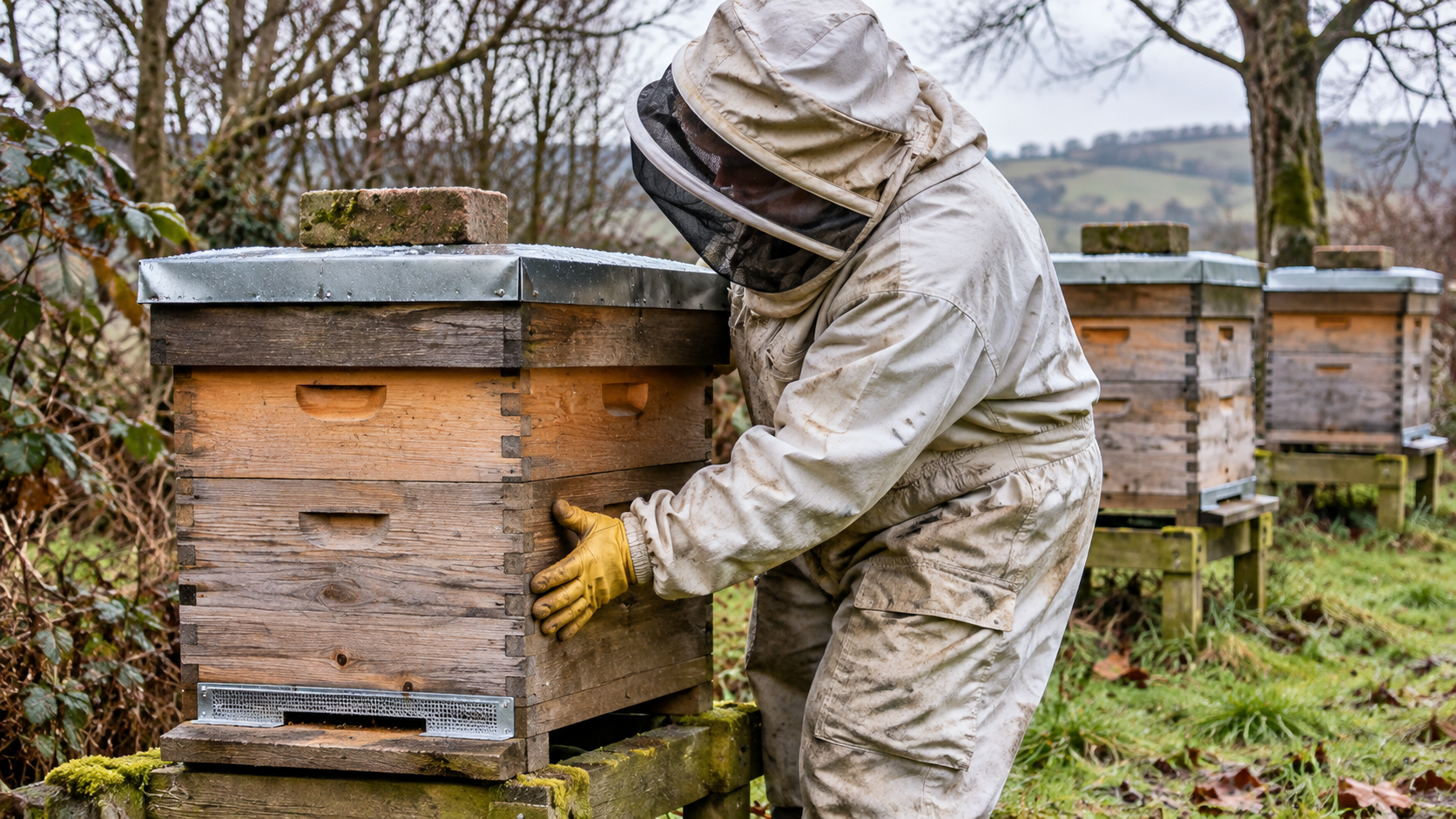
December is a quieter month in the UK apiary, but it is not a month for forgetting the colonies. The best winter visits are short, purposeful and focused on what can be checked without unnecessarily disturbing the cluster.
1. Check hive security after wind and rain
Strong winds can loosen roofs, straps and hive components. Check that roofs remain secure, stands are stable and water is not pooling around the base. If a hive has been shifted or damaged, correct the problem with as little disturbance as practical.
2. Check entrances from outside
Make sure entrances and mouse guards are not blocked by dead bees, leaves or debris. Avoid poking around inside the hive; an external check is usually enough. Look for signs of unusual activity, damage or a hive that has been knocked over.
3. Assess stores without opening the hive
Hefting or weighing provides a useful indication of food reserves. It is not a precise measurement, so compare colonies and your own previous observations. If a colony appears light, make a timely plan for appropriate supplementary feed, positioning it so the bees can reach it readily. Follow reputable UK guidance for the feed and method you use.
4. Keep winter disturbance to a minimum
Routine inspections are not appropriate in cold winter weather. Resist opening colonies simply to satisfy curiosity. A brief external check and good records are generally more valuable than exposing the cluster to cold unnecessarily.
5. Plan Varroa management carefully
Winter can offer a brood-minimum or broodless window, but conditions vary between colonies and years. Do not assume that every colony is broodless because the calendar says December. Consider monitoring evidence, colony condition and your established treatment plan. Use only authorised veterinary medicines and follow the product label and current guidance exactly. The National Bee Unit’s resources for beekeepers include information on Varroa management.
6. Review the season’s records
Use quieter days to review queen performance, colony strength, mite monitoring, treatments, honey production and any unusual behaviour. These records can help identify colonies worth retaining for breeding, colonies that may need attention in spring, and equipment that needs repairing or replacing.
7. Prepare equipment and spring plans
Clean and repair spare equipment, inspect stored frames and supers for pests, and make a realistic list of what you will need next season. Planning now helps avoid rushed purchases when the spring workload begins.
A simple December checklist
- Check roofs, straps, stands and hive stability after storms.
- Confirm entrances and mouse guards are clear.
- Heft or weigh colonies and respond to low stores.
- Avoid unnecessary winter hive openings.
- Review Varroa monitoring and treatment records.
- Check stored equipment and frames for damage or pests.
- Plan repairs, equipment and breeding decisions for next season.
December is about careful observation, preparation and restraint. A secure hive, adequate stores, sensible Varroa planning and useful records help set up the beekeeper—and the colonies—for the months ahead.