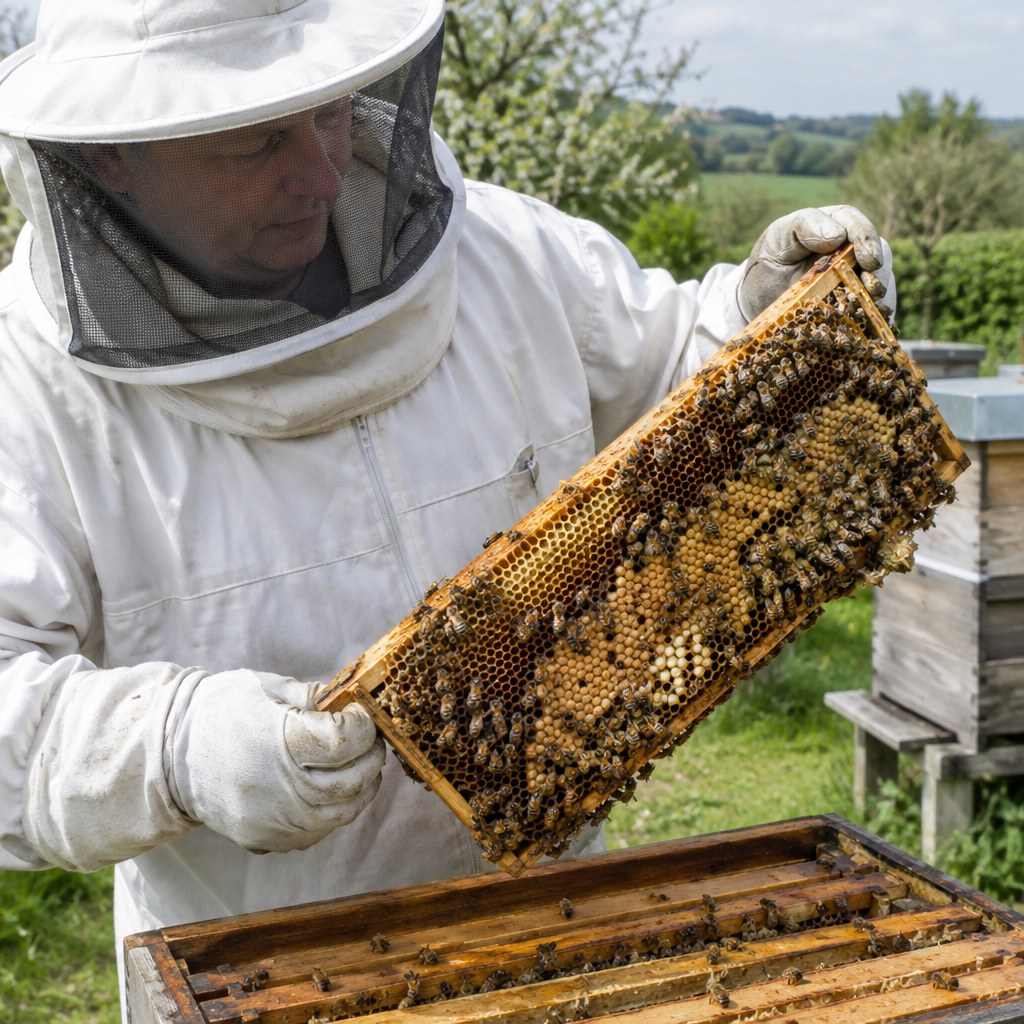
The first full spring inspection is an important moment in the UK beekeeping year. It gives you a chance to assess whether a colony has survived winter, how it is developing and whether it needs intervention. However, opening a hive too early or for too long can do more harm than good.
Rather than treating a date on the calendar as a signal, use weather, colony activity and conditions at your apiary to decide when a first inspection is appropriate.
When should you carry out the first spring inspection?
There is no universal date across the UK. Wait for a suitable mild, calm day when bees are flying and conditions are warm enough to inspect without chilling brood. A brief inspection may be justified earlier in some circumstances, but avoid opening colonies simply because spring has arrived on the calendar.
Prepare before opening the hive
- Have your smoker, hive tool and protective clothing ready.
- Prepare a clean record sheet or digital record.
- Know what you need to check before opening the colony.
- Have feed available if you discover that stores are dangerously low.
- Work efficiently and avoid leaving brood exposed to cold air.
What to check during the first inspection
1. Colony strength
Assess how many frames or areas of comb are occupied by bees. Compare this with the colony’s previous records and the time of year. A colony’s strength should be considered alongside brood, stores and weather rather than judged in isolation.
2. Evidence of a queen
Look for eggs, young larvae and a developing brood pattern. Seeing the queen is useful but not essential if clear evidence of recent laying is present. Record what you actually observe rather than making assumptions.
3. Brood condition
Assess the brood pattern and look for unusual signs, including abnormal larvae, discoloured cappings or other disease indicators. Do not diagnose serious brood disease from a single sign. If foulbrood is suspected, stop frame movement and contact the appropriate bee inspector or authority.
4. Food stores
Check the colony’s remaining food and assess whether it has enough to support brood rearing and the weather ahead. Colonies can consume stores rapidly during spring build-up, particularly when cold weather interrupts forage. If stores are inadequate, use an appropriate feeding method and avoid contaminating honey intended for harvest.
5. Space
Consider whether the colony has sufficient room for brood development and incoming nectar. Avoid adding unnecessary space to small colonies, but be ready to respond as strong colonies develop. Decisions should be based on colony condition and the configuration of your hive.
6. Queen and colony problems
Look for signs that warrant further investigation, such as a failing brood pattern, unusual temperament, a colony that is unexpectedly weak or evidence of queenlessness. Record the concern and decide on a sensible follow-up rather than making hurried changes during the inspection.
Keep the inspection short and purposeful
Early spring brood can be vulnerable to chilling. Avoid prolonged frame-by-frame examination unless there is a clear need. Keep frames in order, close the hive promptly and avoid unnecessary disturbance.
After the inspection
- Record colony strength, brood, queen evidence and stores.
- Note feeding or other action taken.
- Record any disease concerns or unusual observations.
- Set a follow-up date or condition for reassessment.
- Ensure the hive is closed, stable and protected from the weather.
Common first-inspection mistakes
- Opening colonies during cold, windy or unsuitable weather.
- Spending too long inspecting brood frames.
- Searching unnecessarily for the queen when eggs and larvae provide evidence.
- Failing to check stores carefully.
- Adding space too early or too late without considering colony strength.
- Moving frames between colonies when disease is suspected.
- Failing to record findings and follow-up actions.
First spring inspection quick checklist
- Choose a suitable weather window.
- Prepare equipment and records before opening.
- Assess colony strength and brood condition.
- Check for evidence of recent queen laying.
- Assess food stores and feeding needs.
- Review space and any signs of swarm preparation.
- Note health concerns and avoid spreading suspected disease.
- Record observations, actions and follow-up.
Frequently asked questions
Should I inspect on the first warm day of spring?
Not automatically. Consider temperature, wind, colony activity and whether conditions allow brood to be inspected without chilling. Choose a suitable weather window.
Do I need to find the queen?
No. Eggs and young larvae can provide useful evidence of recent laying. Avoid spending excessive time searching when other evidence is clear.
What if I find very little food?
Assess the colony’s needs and use an appropriate feeding method if stores are inadequate. Avoid placing feed where it could contaminate honey intended for harvest.
Plan the next stage of spring
The first inspection should provide a baseline for subsequent decisions. As colonies build, monitor stores, brood development, space and swarm preparations. A consistent inspection routine and accurate records help you respond to each colony rather than managing every hive identically.
Read our simple, methodical hive inspection guide, feeding guide and UK beekeeping calendar. Our free beekeeping resources also include practical inspection and record-keeping downloads.
Read our cornerstone article, Locally Adapted Bees in Britain: The British Black Bee, for more on regional adaptation, selection and sustainable beekeeping.