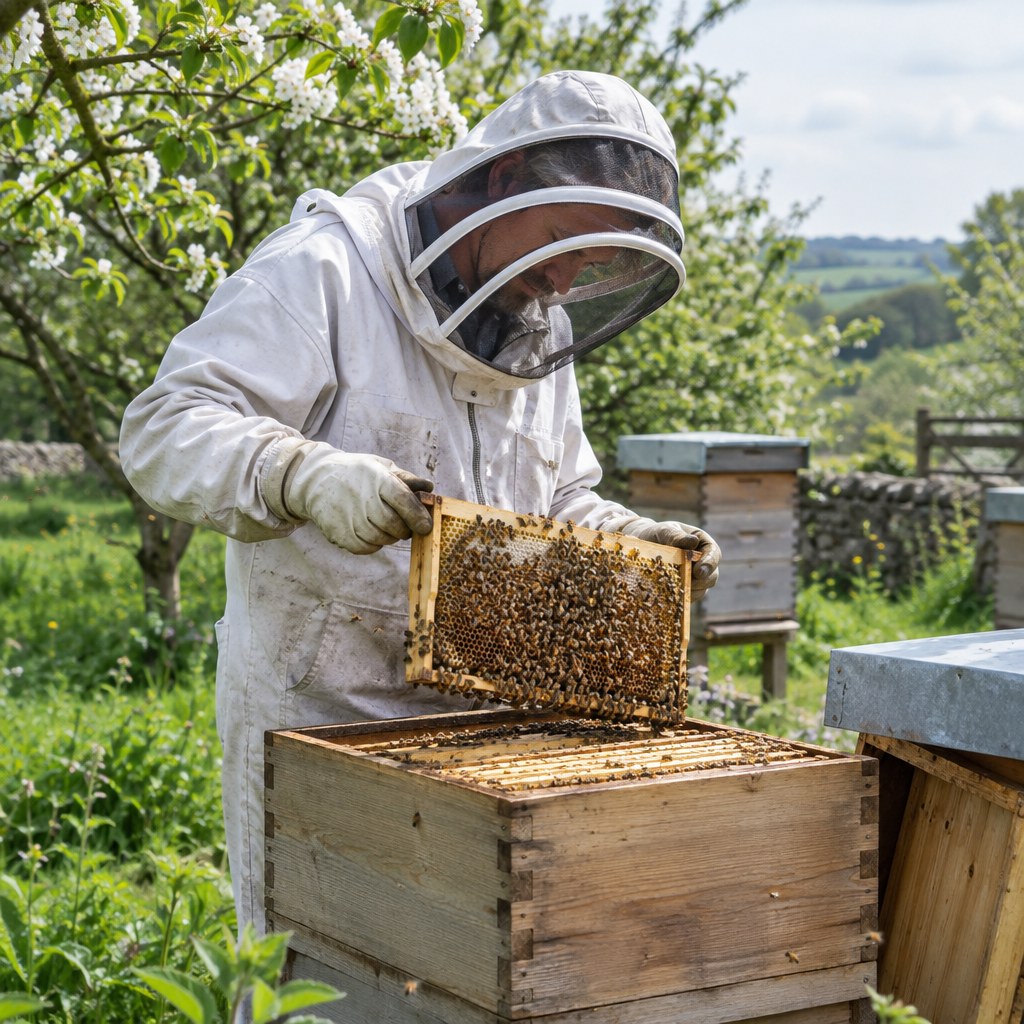
Swarm Management in the UK: A Practical Guide
Swarming is a natural way for honey bee colonies to reproduce. During the UK beekeeping season, colonies can build rapidly, become congested and begin preparing to divide. Understanding the signs and having a management plan can help beekeepers respond calmly and responsibly.
This guide brings together the key considerations for swarm management: recognising preparation, assessing queen cells, thinking about space and colony condition, keeping records and planning inspections.
Why colonies swarm
Swarming is a reproductive process. A colony may prepare to swarm when it has developed strongly and conditions support reproduction. Colony congestion, brood-nest conditions, queen condition, weather and forage availability can all influence the situation. There is no single trigger or universal timetable.
Recognising swarm preparation
Signs that may indicate swarm preparation include:
- Queen cells being constructed or developed.
- A colony that has grown rapidly and is crowded.
- Changes in the space available for brood and stores.
- Changes in colony behaviour that warrant closer inspection.
Signs must be interpreted together rather than treated as a checklist that guarantees a swarm is imminent.
Inspect regularly during the active season
During the UK spring and summer, inspections should be planned around colony development, weather, local conditions and the beekeeper’s management method. Inspect carefully, avoid unnecessary disruption and record what you see. Consistent inspection routines are more useful than rushed, reactive visits.
Our guide A Simple, Methodical Hive Inspection Routine covers a structured approach to inspections and decision-making.
Queen cells: assess before acting
Queen cells can indicate swarm preparation, supersedure or emergency queen rearing. Their number, location and appearance can provide clues, but colony context matters. Check queen status, brood, colony strength and recent history before deciding what to do.
Read our companion articles: What to Do When You Find Queen Cells in Your Hive and How to Tell Whether a Honey Bee Colony Is Queenright.
Space and colony congestion
Beekeepers need to consider whether the colony has appropriate room for its developing brood nest and stores, taking account of hive configuration, season and strength. Adding space is not a guaranteed solution to swarm preparation, and management should be adapted to the colony rather than applied mechanically.
Have a swarm-management plan
Before swarm season, make sure you understand the management approach you intend to use, have the equipment and time to carry it out, and can follow up afterwards. Different methods have different requirements, and complicated manipulations should be learned with practical guidance if you are not confident.
Prepare equipment in advance, maintain records and consider the implications for queen status, colony strength, subsequent inspections and the availability of suitable resources.
What to record
- Date and weather conditions.
- Colony strength and brood condition.
- Queen status and evidence of recent laying.
- Queen cells observed, including approximate number and location.
- Space and congestion observations.
- Management decisions and follow-up date.
Records can help you compare colonies, learn from decisions and plan the next inspection. Our printable beekeeping planners include a Swarm Management Planner among the resources listed in the collection.
Free swarm and hive-management resources
Download practical resources from our Free Beekeeping Guides library, including the Swarm Preparation Guide, hive inspection guide and other useful seasonal records.
When colony growth and resources allow, planned splits can help build additional colonies. Read our Making Nucleus Colonies in the UK: A Practical Guide to Splits and Nucs.
Follow the UK beekeeping year
Swarm management is part of a wider seasonal approach to colony care. Use our Complete UK Beekeeping Calendar to help plan tasks through the year.
Swarm-season preparation checklist
Before the main swarm season, review this preparation list:
- Set a realistic inspection routine based on colony development and conditions.
- Ensure suitable spare equipment is available and ready.
- Review queen status and colony strength as part of inspections.
- Know how to recognise and interpret queen cells.
- Decide which swarm-management approaches you can carry out competently.
- Keep records of inspections, observations and actions.
- Plan how to follow up after any intervention.
Frequently asked questions
Does finding queen cells mean a colony will swarm?
Not necessarily. Queen cells may relate to swarming, supersedure or emergency queen rearing. Assess the colony’s history, queen status and other observations before deciding.
Can adding a super prevent swarming?
Adding space may address some congestion issues, but it is not a guaranteed solution to swarm preparation. Consider the brood nest, colony strength, season and management approach.
What should I do if I am unsure which swarm method to use?
Do not rush into a complicated manipulation. Seek practical guidance from an experienced beekeeper or association mentor, and make sure you understand the method and its follow-up requirements.
Conclusion
Successful swarm management begins with preparation, observation and informed decisions. Learn to recognise the signs, assess each colony in context, keep useful records and have a management plan before the season becomes busy. When in doubt, seek practical advice from an experienced local beekeeper or association mentor.
Related reading: Locally Adapted Bees in Britain: The British Black Bee discusses regional adaptation, responsible selection and sustainable colony management.